Before the World Cup starts, the most exciting and mind-boggling thing is predicting the score. Whether betting with friends or playing quizzes on your own, facing the starting lineups and odds of two teams, it's easy to fall into the anxiety that 'any score seems possible.' Especially in the group stage, upsets are everywhere, total scores and half-time/full-time results contradict each other, and relying solely on watching experience makes it hard to consistently keep your win rate above the passing line.
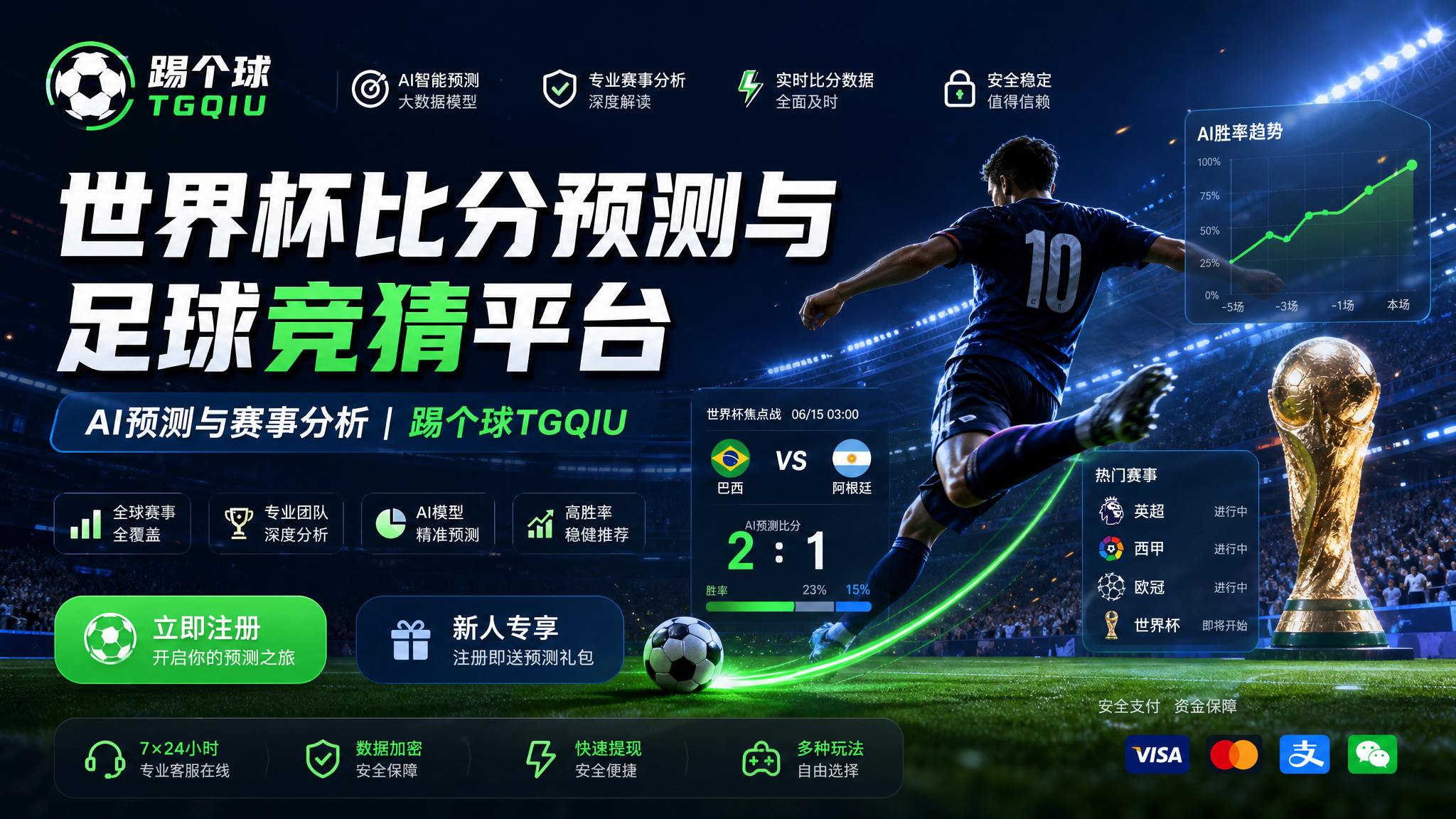
AI predictions and expert analysis, who should you trust?
The most direct way to use Tigeqiu TGQIU is to check the AI score predictions and expert analysis results before the match starts. The AI provides probability distributions based on player data, historical matchup counts, and tactical models, such as the probability of the home team winning and the most likely score. Expert analysis, on the other hand, is more like a post-match review-style preview—it mentions details like 'whether key players are injured' or 'how much rainy weather affects a team's playing style.'
Frankly, the conclusions from both sides often differ. AI is conservative, leaning toward the most frequent scores in historical data; experts sometimes give slightly bolder judgments, like upsets or penalty shootout wins. My own experience using it a few times is that AI's accuracy is decent during the group stage, especially for matches with clear strong and weak teams; after entering the knockout stage, the reference value of expert analysis increases significantly, because players' mentality and on-the-spot tactical changes have a greater impact on results, and AI's model can't keep up. So don't stick to one side; take a look at both and combine with your own judgment for a safer approach.
User rankings and win rate calculation, a real pressure
The platform also features user rankings and win rate calculation. After participating in predictions each day, you can see your ranking among all users. This feature is more useful than imagined—not just to satisfy the desire to win or lose, but to give you real feedback when you're wrong. For example, if you predict three matches in a row incorrectly within three days, your ranking drops directly to the bottom 25%. At that point, you'll naturally reflect on your judgment logic instead of blindly trusting a certain set of data.
For serious players, this ranking actually provides two practical values: first, you can see what matches the top-ranked users predicted in the past and learn from their analysis and judgment paths (some public prediction records are visible on the platform); second, the win rate calculation helps you filter out the types of matches you are best at, for example, some are good at guessing low-score draws, others are good at judging over/under directions. This way, you can consciously avoid prediction directions you're not good at.
Free to play, but understand its limits
The basic functions of Tigeqiu TGQIU—AI predictions, match analysis, participating in rankings, viewing expert scores—are all free. Unlike platforms that immediately ask you to recharge to see 'inside information,' its logic is more about using data and community interaction to assist judgment, rather than directly telling you 'this score is a sure win.'
But its limits must also be made clear. The essence of AI prediction is probability calculation, not fortune-telling. When group stage data is sufficient, its reference value is high; but in the final stage, too many variables in a single match decide the outcome, and the AI model's accuracy drops significantly. If your goal is to 'predict every match correctly,' then no prediction tool can help. The most reasonable way to use such a platform is: it helps you eliminate some obviously unreasonable options. For example, if historical matchups and recent form both indicate the away team is unlikely to win, but the odds are abnormal, then the conservative opinion from AI or experts can help you avoid unnecessary risks; at the same time, it helps you observe long-term win rate rather than single match wins or losses.
Who is worth spending time on
Simply put, if you fall into the following three categories, Tigeqiu TGQIU is indeed valuable:
- Just starting out with World Cup betting and need a data framework to build your own judgment system, rather than relying entirely on gut feelings or following the crowd.
- Already have some experience watching games, but your long-term win rate is stuck around 50% and you want to improve. Rankings and AI data can help you find blind spots in your judgment.
- Enjoy discussing prediction logic with global fans instead of calculating alone in silence. On the platform, there are many user discussions every day, and expert analysis also includes some representative opinions.
At the end of the day, the fun of score prediction and football betting lies not in 'winning every match,' but in betting on the result you analyzed yourself. What Tigeqiu TGQIU does is make this analysis process more transparent and provide more references—whether you finally choose 3-1 or not is still your decision.
Comments
Leave a Comment